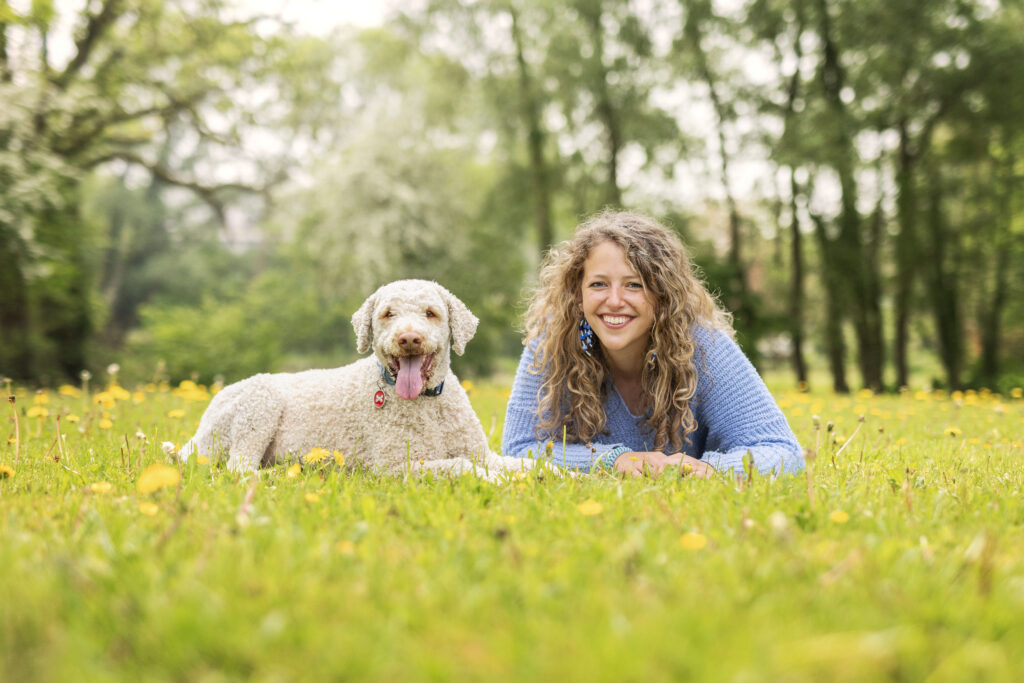
Who am I?
My name is Luca Barbara Bernáth. I’m a clinical psychologist and dog behaviour & training consultant.
My practice reflects who I am: grounded in science, attentive to relationships, and deeply convinced that every person and every dog deserves support that truly fits them.
My journey
I was born in Budapest and grew up in Belgium from the age of 7. Arriving in a new country without knowing the language, having to get my bearings, find my place and rebuild from scratch… These experiences marked me deeply, they shape the way I support others to this day. My first name is pronounced “Lootsah,” and yes, it is a genuine Hungarian woman’s name. After all these years living in a country where it raises questions, I won’t mind if the pronunciation isn’t perfect!
For as long as I can remember, I’ve wanted people to feel better. In a fast-moving world where we all feel pressure to appear strong rather than vulnerable, it can be hard to find a place to set down the weight we carry. I’ve always wanted to create and offer such a space, where people can share what they’re going through, without fear of judgment – that’s what led me to psychology. My journey began at UCLouvain, where I started my Bachelor’s degree in psychological and educational sciences.
I was motivated to learn about human emotions and behaviour, but I felt something was missing. I’ve always had a deep love and fascination for animals: Ubi, my first dog, came into my life in my final year of secondary school and has held a central place in it ever since, he pushed me to expand my learning and skills into animal behaviour. Alongside my university studies, I began training to work with dogs. I completed my foundational training at the Canischola centre, and my final project focused, unsurprisingly, on the bond between humans and dogs.
During my Master’s, the time to choose an internship came, and I had the opportunity to spend six months working in animal-assisted therapy (or pet therapy). This experience confirmed to me that I wanted to keep going down this path, so I continued as a volunteer in animal-assisted mediation. My university thesis examined the effects of animal-assisted mediation on the wellbeing and quality of life of children and adolescents. I graduated with a degree in clinical psychology from UCLouvain in 2024.
Right after finishing my studies, I went straight into a year-long training programme in animal-assisted therapy at the Haute École Vinci, to learn how the presence of trained therapy-animals can positively impact our mental and physical health.
I launched my own practice in April 2024, so I could live out and share my passions. I remain endlessly curious and committed to lifelong learning, so I can support you as best as possible through my different services.
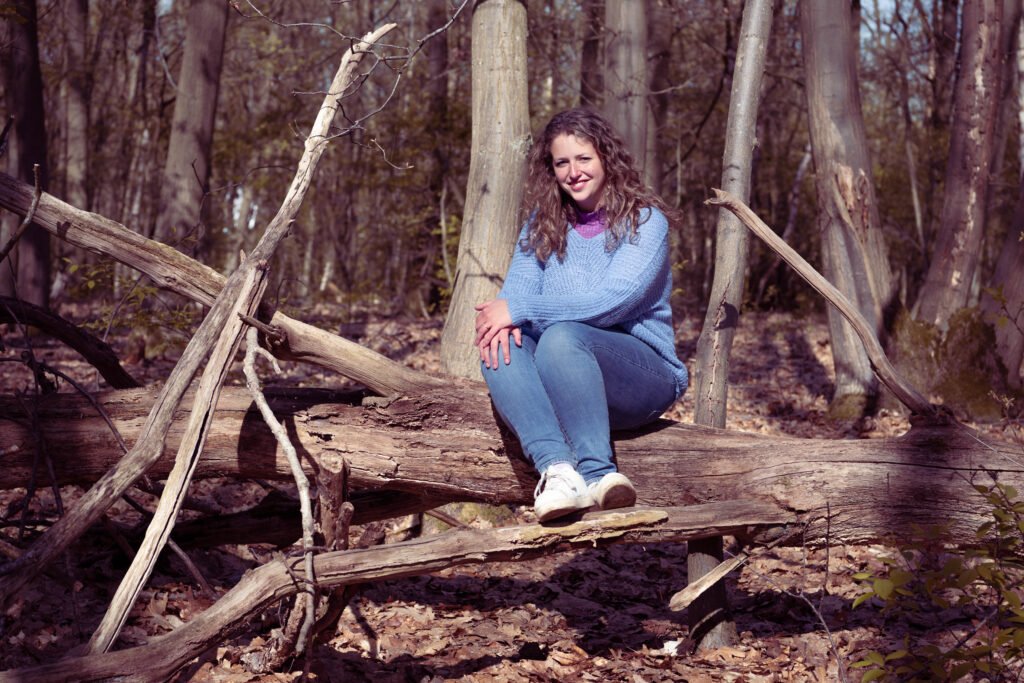
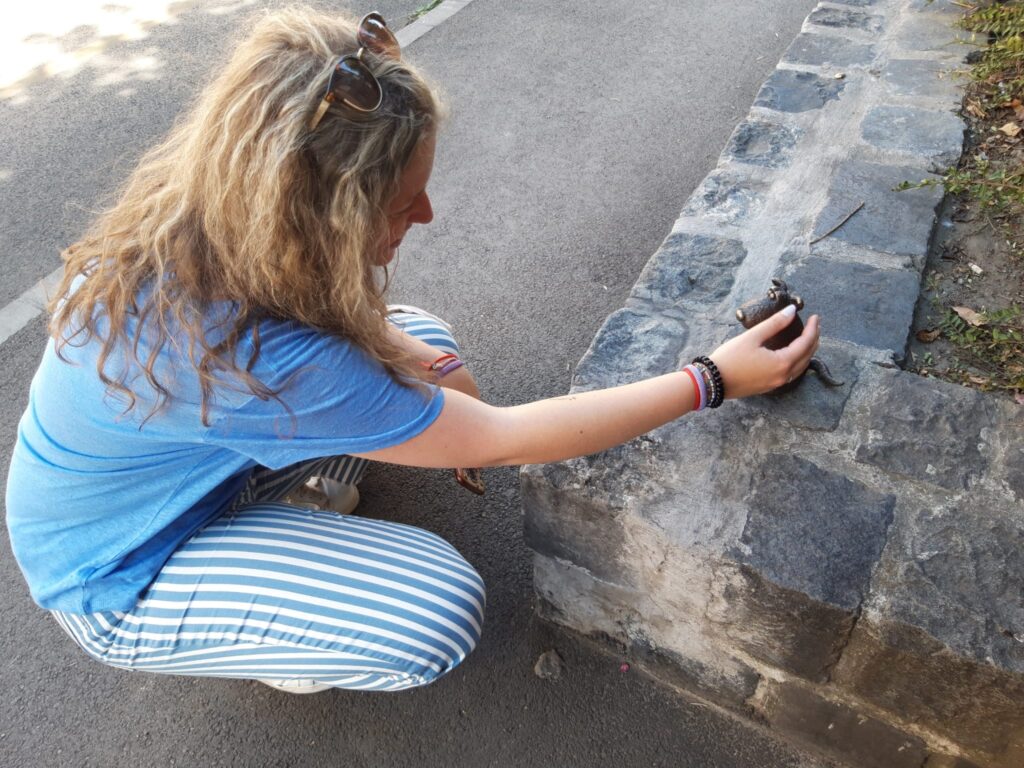
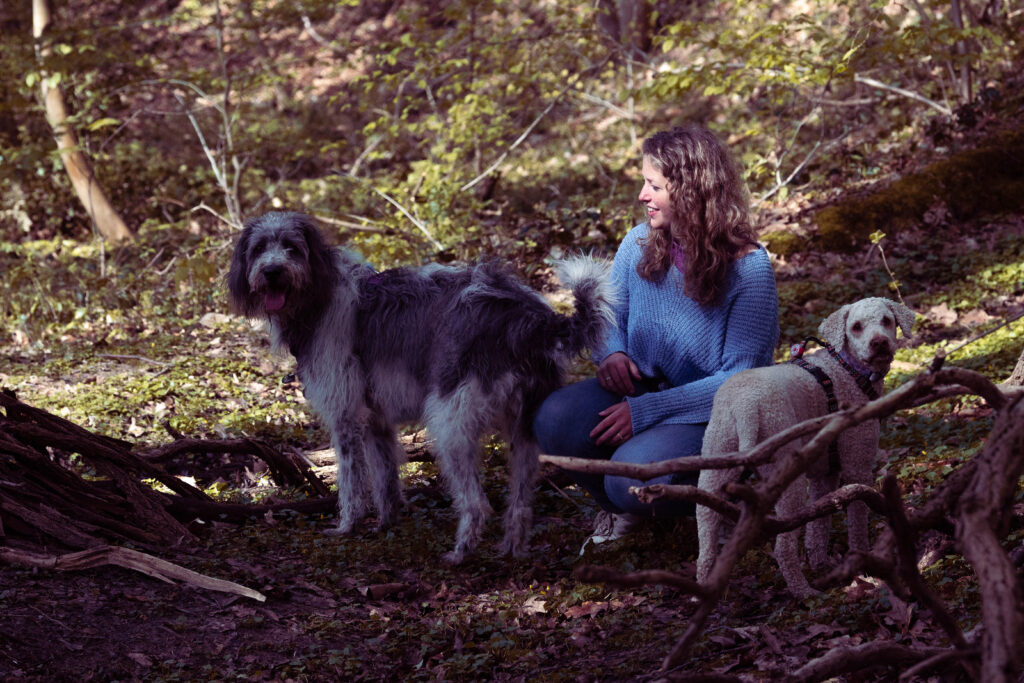
Why the Human-Dog Bond?
Supporting dog guardians is something I care about deeply, it holds real importance in my practice. Beyond my many years of training, it was mainly my own lived experience that led me down this path.
My journey into the world of dogs began when Ubi came into my life. I was 17, and he was my first dog. In caring for him, I made plenty of mistakes (ones I wouldn’t make today) and learned a great deal – I also discovered the kind of unconditional love you can feel for another living being, and a real passion for dogs.
Years later, as I was finishing my training in canine behaviour, adopting Artur — a sensitive Spanish dog — opened my eyes to other realities of life with dogs. Artur is a large dog who lived on the streets, he also feels his emotions intensely. He’s wary of strangers, selective about who he bonds with, and reactive toward other dogs. His arrival confirmed to me just how overwhelmed even experienced guardians can feel in certain situations. With him, I experienced stress, guilt, other people’s judgment, exhaustion… that mix of love and overwhelm that many guardians of “complicated” dogs know well, but rarely talk about. And as Ubi grows older, with his evolving fragilities and needs, I live daily with what it means to adapt your life to your animal’s reality, which isn’t always simple, or free from emotion.
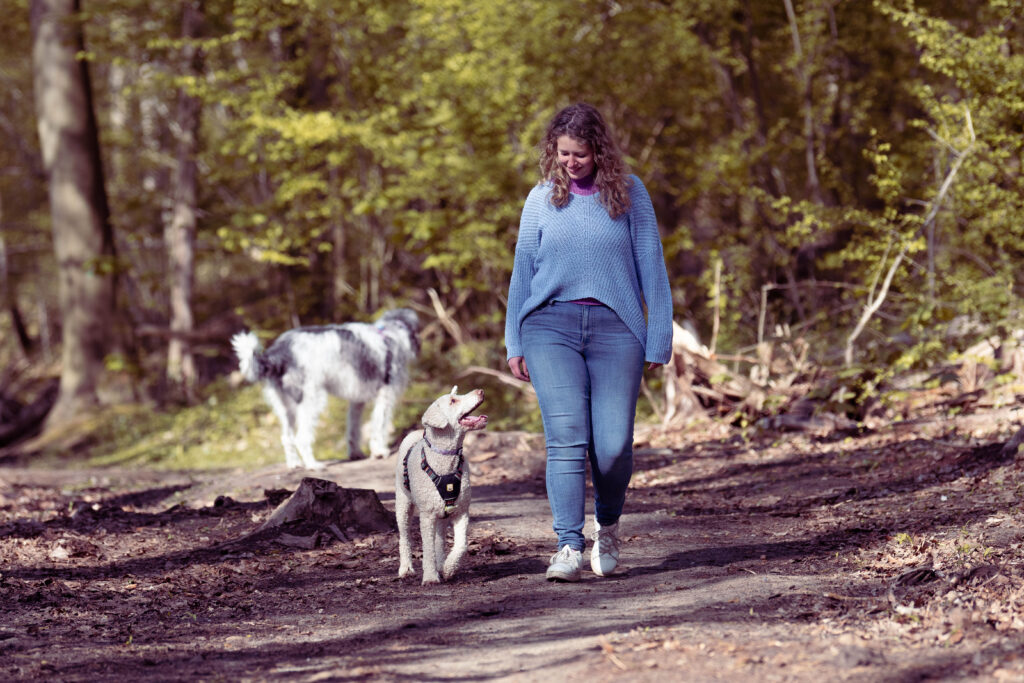
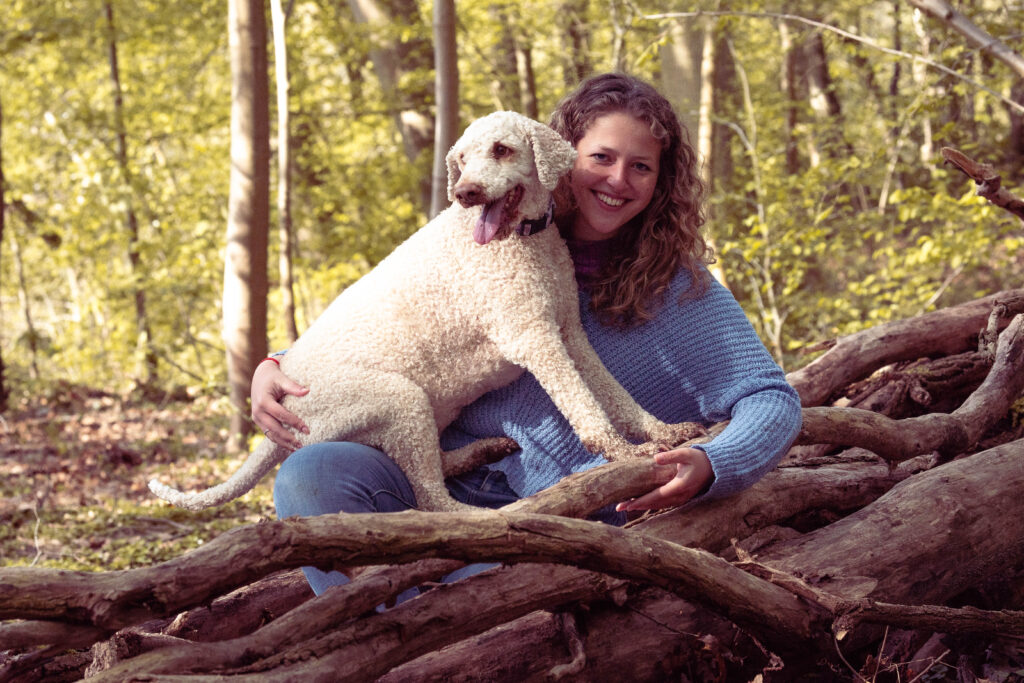
Something I’ve noticed is that even when a dog is being followed by a trainer or behaviourist, the emotional and psychological reality of the human is often set aside, even though it matters just as much. I decided to create a space for the mental health of people living with dogs facing difficulties, as the emotions on both sides of the bond deserve to be seen and heard.
My Values
I believe that every person and every dog is unique, and that support needs to be adapted to this reality. In my sessions, I work without judgment, looking for what works for you rather than forcing a one-size-fits-all approach.
I also strongly believe in collaboration: if I’m not the right person to support you, I will point you toward the right professional. I also believe in the power of creativity to transform what hurts into something new, it allows us to explore our strengths, accept our vulnerabilities, and build something from there. What matters most in my practice, above all, is connection : to yourself, to others, and to your animal.
Why Alebrije thérapie?
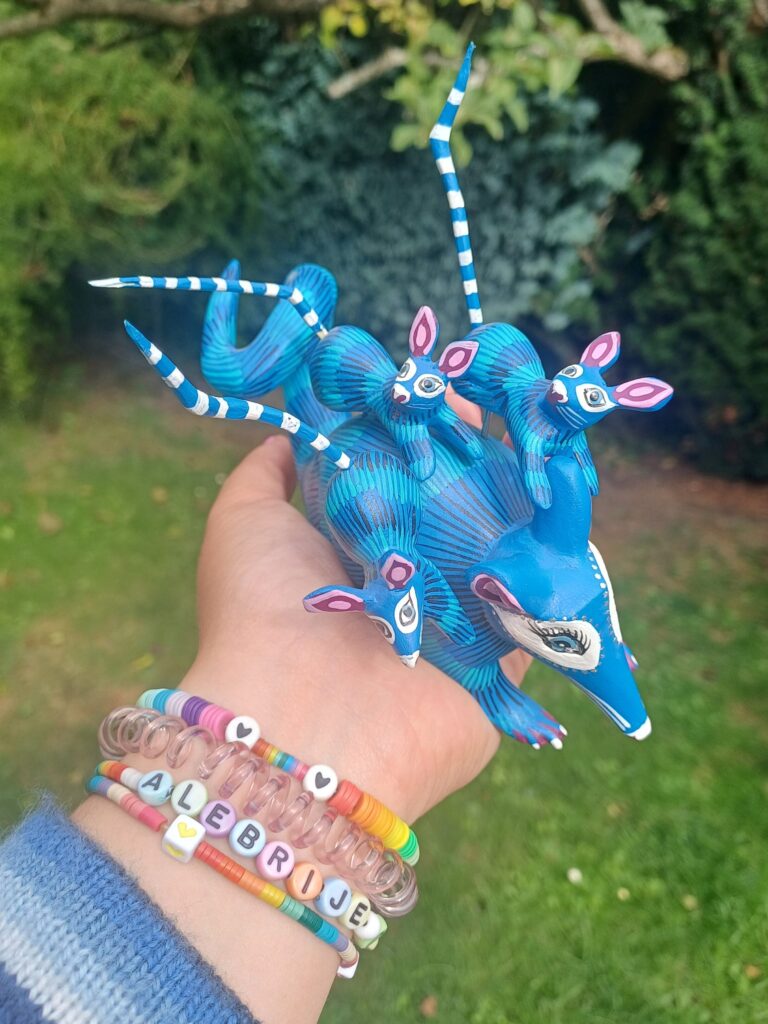
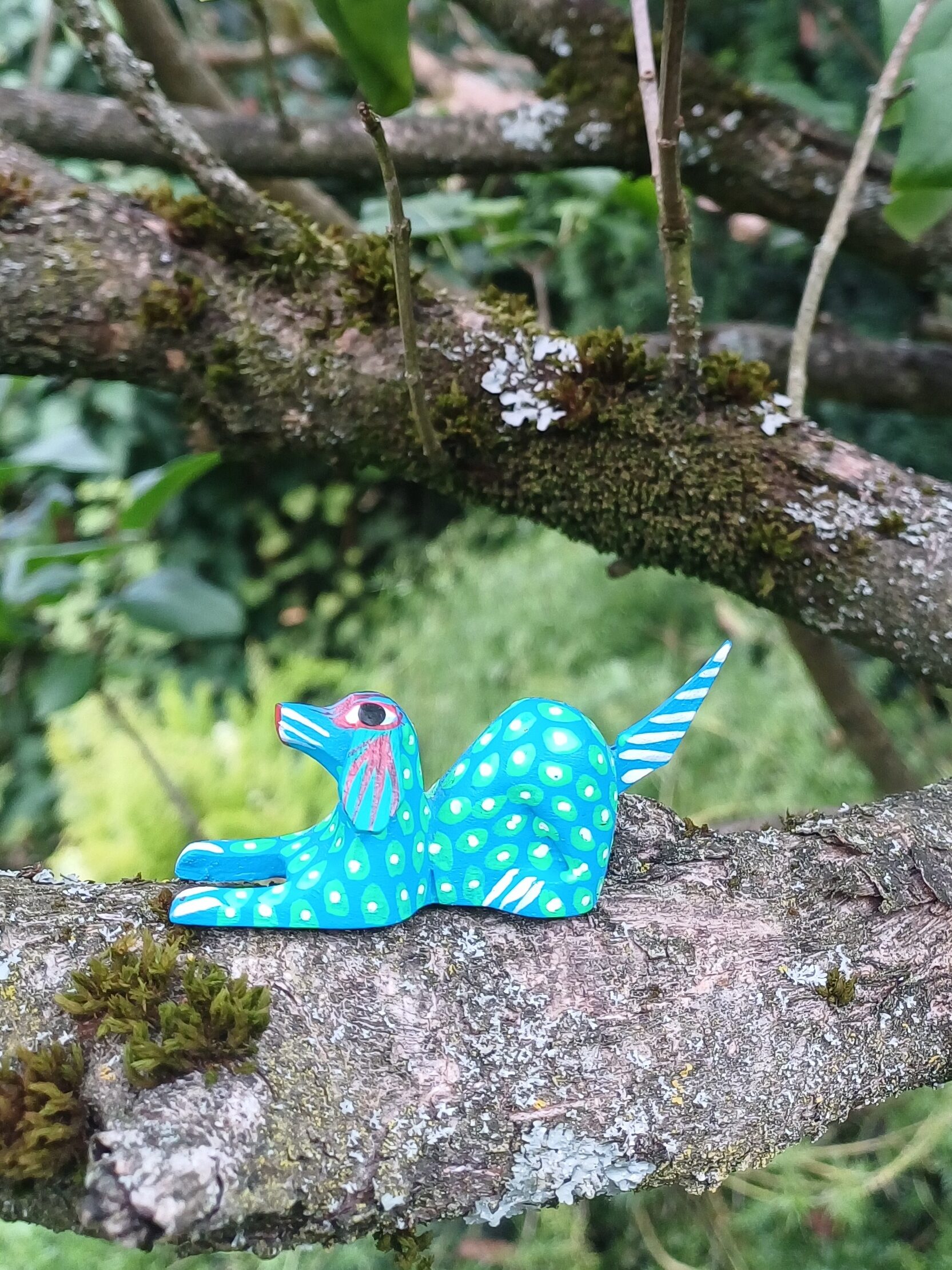
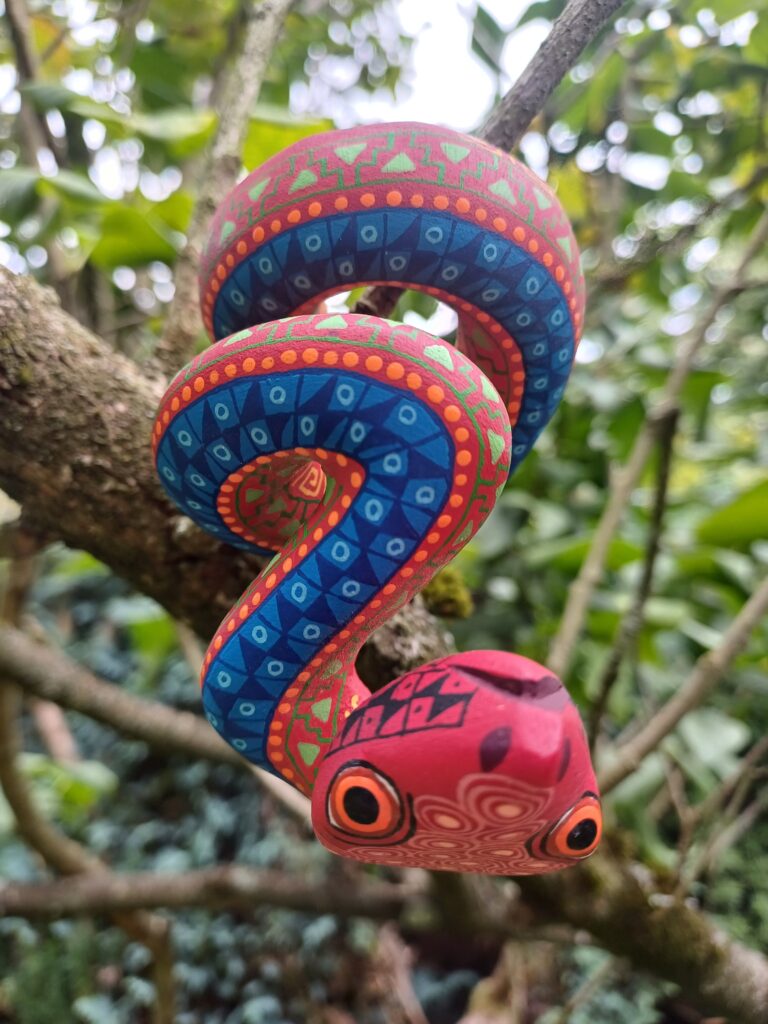
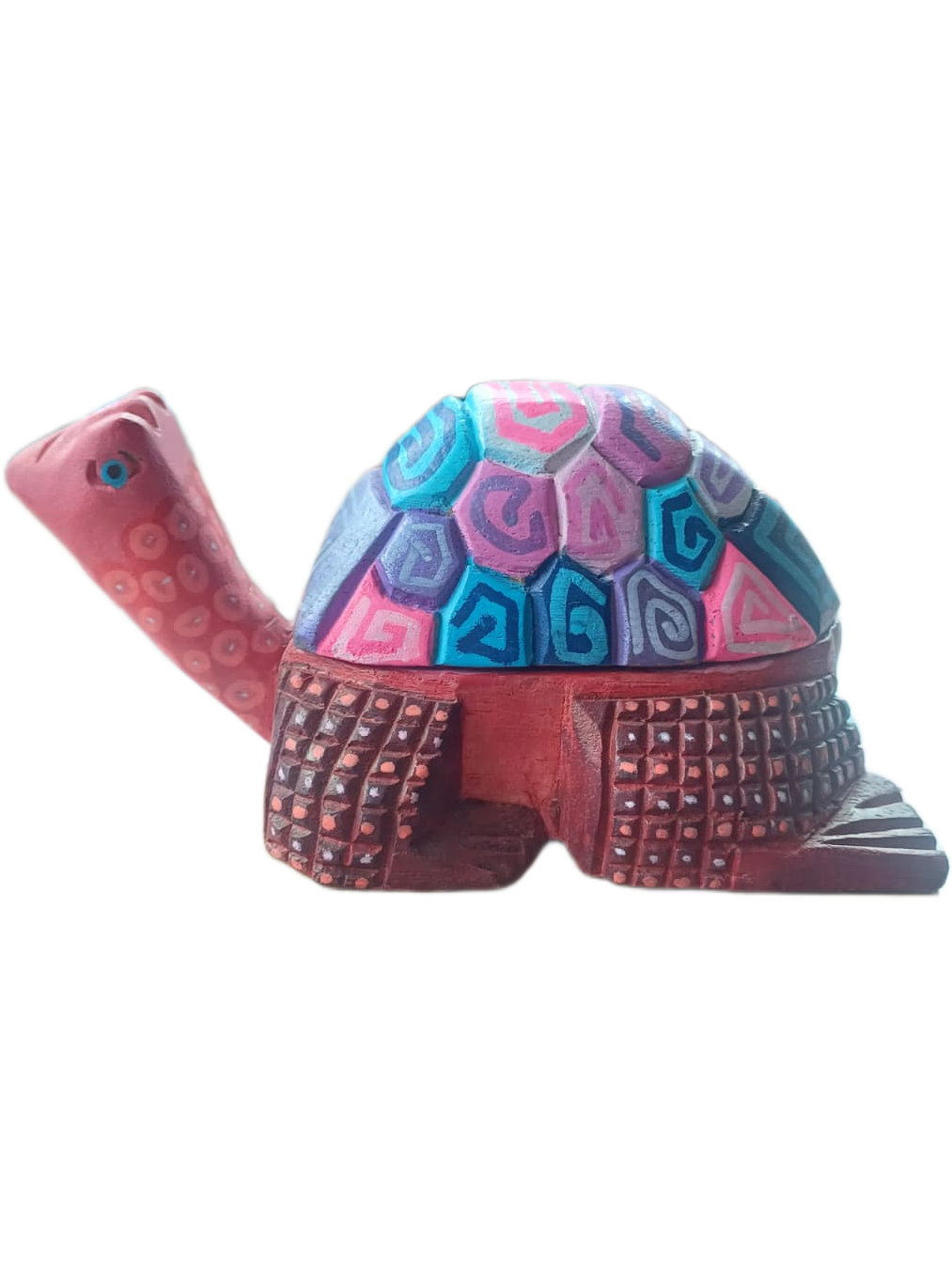
Alebrijes (pronounce: ah-leh-BREE-hez) are colourful, handcrafted Mexican animal sculptures, each one is unique and impossible to reproduce exactly. They are imaginary creatures first created in the 1930s from an artist’s mind, and have since become a symbol of creativity, individuality, and living craftsmanship. The symbolism of alebrijes speaks to me deeply: like alebrijes, I believe we’re all made of different colours: strengths, fragilities, brighter parts and shadowed ones. Since animals have always been there to guide me, they are my own, personal alebrijes, they have shown me the way, and continue to do so every day. Besides, I believe we all could use some more colour in our lives.